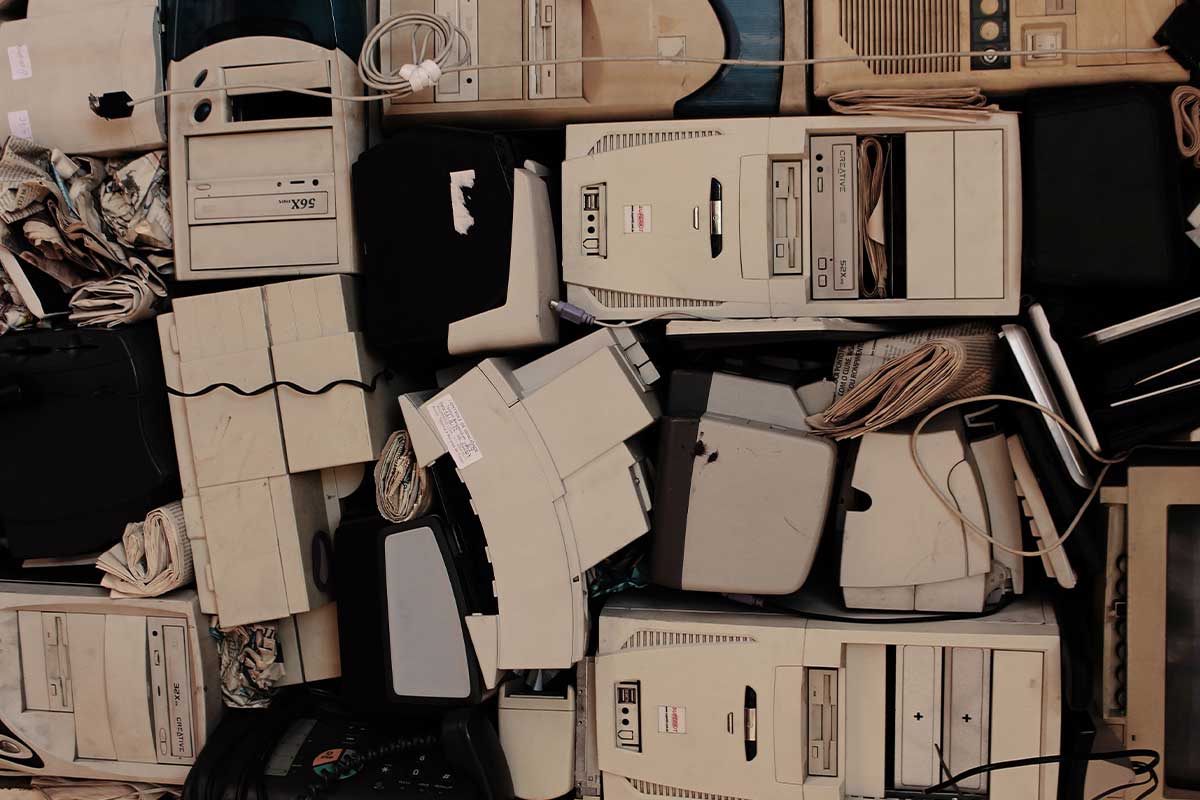
One box of old files or asingle unwiped hard drive is all it takes to turn redundant paperwork into areportable data breach, with the fine and reputational damage that follow. Records and IT equipment that have reached the end of their life have to be destroyedin a way you can prove afterwards. From the initial collection through to theissue of a Certificate of Destruction, Ede's manages every stage of the process with security, accountability and compliance at its core, coordinating specialist destruction partners so nothing sensitive is left to chance.
Confidential waste falls into two categories, and each needs a different process:
Paper records and files.
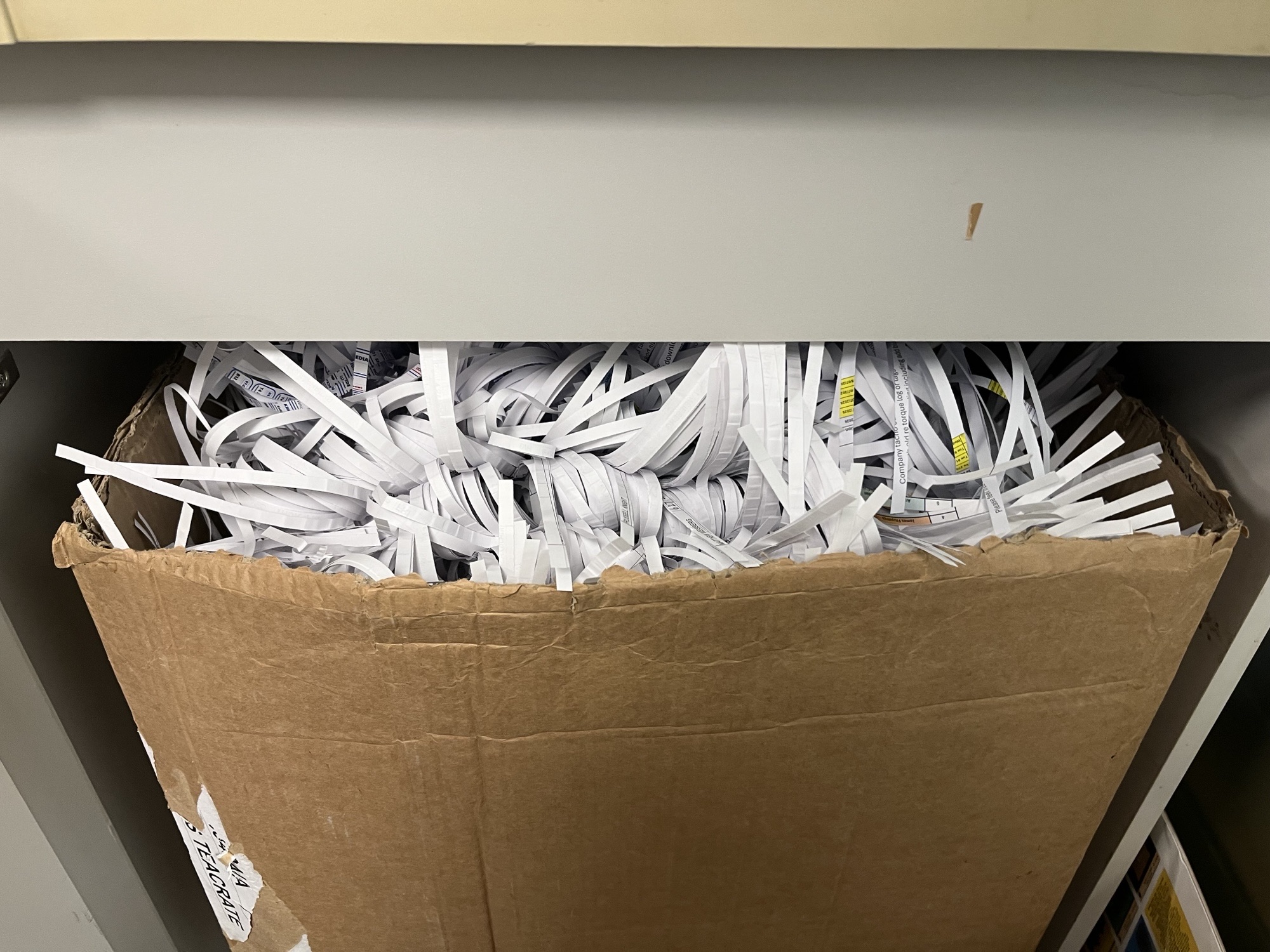
Documents are collected in sealed sacks or lockable consoles and shredded to the BS EN 15713:2023 security standard for confidential material. You can choose off-site shredding, where material is collected and destroyed at a secure facility, or on-site shredding, where a mobile unit destroys it at your premises and you can witness it. Everything from a single archive box to a full records room is handled the same way.
Data-bearing devices.
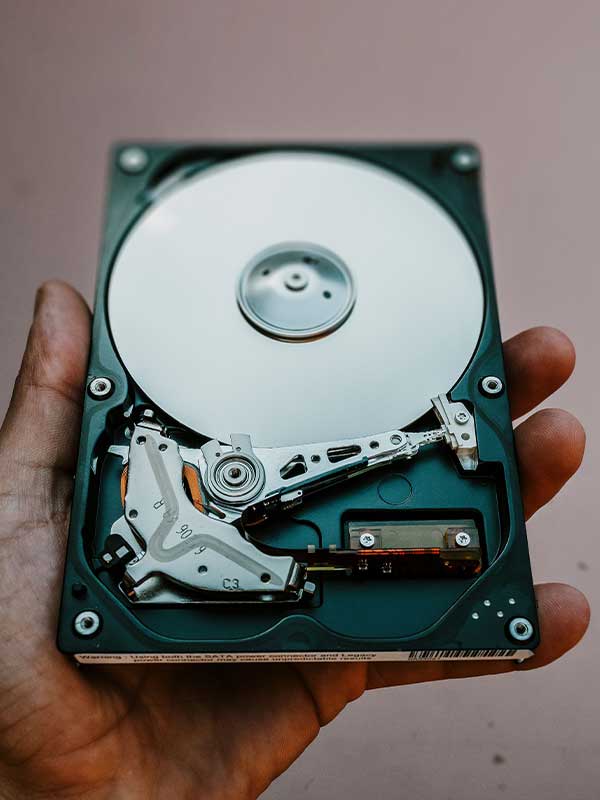
Hard drives, servers, laptops, phones, tablets and backup media hold data that a factory reset does not remove. These are either physically destroyed or securely wiped, then recycled through our WEEE recycling process. The options are covered in hard drive and media destruction below.
The chain of custody is what you are really buying: a documented trail that proves your material stayed secure from your desk to the point of destruction.
After destruction, shredded paper is baled for recycling and the materials recovered from destroyed devices are recycled responsibly, so secure disposal also feeds into your sustainability reporting rather than going to waste.

Hard drives and other storage media need more than deletion, because deleted files can be recovered. There are two accepted methods, and the right one depends on the sensitivity of the data and whether the hardware still has value:
We help you decide which method applies to each device. Equipment that is being retired rather than reused then flows into our WEEE recycling and, where a whole site is involved, our IT relocation and clearance work, so it is all handled under one point of contact.
Under UK data protection law you remain responsible for personal data right up to the moment it is securely destroyed, and for being able to demonstrate that it was. Handing records to a third party does not hand over that responsibility, so you need a provider who documents the whole process and gives you evidence of destruction. For the detail of what applies to your organisation, the Information Commissioner's Office (ICO) is the authority to follow. Our role is to make your compliance demonstrable: a documented chain of custody and a Certificate of Destruction for every collection.
A Certificate of Destruction is the document that proves your confidential material was destroyed properly. It records what was destroyed, the date, the method used and the partner that carried it out, tied back to the chain-of-custody record from collection. It is your evidence, for auditors, regulators or your own governance, that the data no longer exists and that your obligations were met. Keep it on file: if you are ever asked to show that a record was disposed of correctly, the certificate is what you produce.
A Certificate of Destruction is a document confirming that your confidential material was destroyed, recording what was destroyed, when, how and by whom. You need it as evidence for auditors, regulators or your own governance that the data no longer exists and that you met your obligations. Keep it on file for as long as you would need to demonstrate compliance.
Both are available. On-site destruction means a mobile unit destroys or shreds the media at your premises and you can witness it. Off-site means secure collection and destruction at a partner facility. On-site suits the highest-sensitivity data or where you want to see it done, while off-site is often more practical for larger volumes. Either way you receive a Certificate of Destruction.
For most reuse cases, certified wiping with NCSC-approved software renders data unrecoverable to a recognised standard and lets the hardware be reused or resold. For the highest-sensitivity data, faulty drives, or where your own policy requires it, physical destruction is the safer choice because the media no longer exists. We help you match the method to the data.
Material is collected by security-cleared staff in sealed, tamper-evident containers, logged out at your site, moved in secure vehicles and tracked through a documented chain of custody to the point of destruction
If records are not ready for destruction because you are required to keep them, they can be held in secure archive storage and destroyed later when their retention period ends. We can manage both the storage and the eventual destruction.
Yes. Confidential paper records and data-bearing IT equipment are handled through the same managed service, with paper shredded to BS EN 15713:2023 and devices destroyed or wiped, then recycled through our WEEE process.
To arrange a secure collection or discuss your data destruction requirements, contact our team.








Our relocation crews are permanently employed, trained in-house and Enhanced DBS checked, as standard. This gives our clients complete confidence that experienced, trusted professionals are supporting them.

Accredited to ISO 9001, ISO 14001 and ISO 45001, Ede's combines industry-recognised quality, environmental and health & safety management systems with secure GDPR-compliant data handling and responsive customer support.

From straightforward office moves to complex multi-site relocations, we develop bespoke solutionsthat are tailored to your business, your objectives and your budget.